
As we’re in isolation at the moment, what better time to take some photos of your children. Here’s a few tips to help you along:
Setting Goals …. realistic ones!
Step 1:
The most important thing to remember when photographing your own children is to set realistic goals. Yes we want a ‘real smile’ but sometimes that’s easier said than done (whatever you do, don’t ask them to say cheese)! You ask a child to smile and you’ll get a cheesy grin, it’s anything but natural. Make it fun for your kids, make it a game. More importantly make it fast, smiles tend to get stale after just a few seconds.
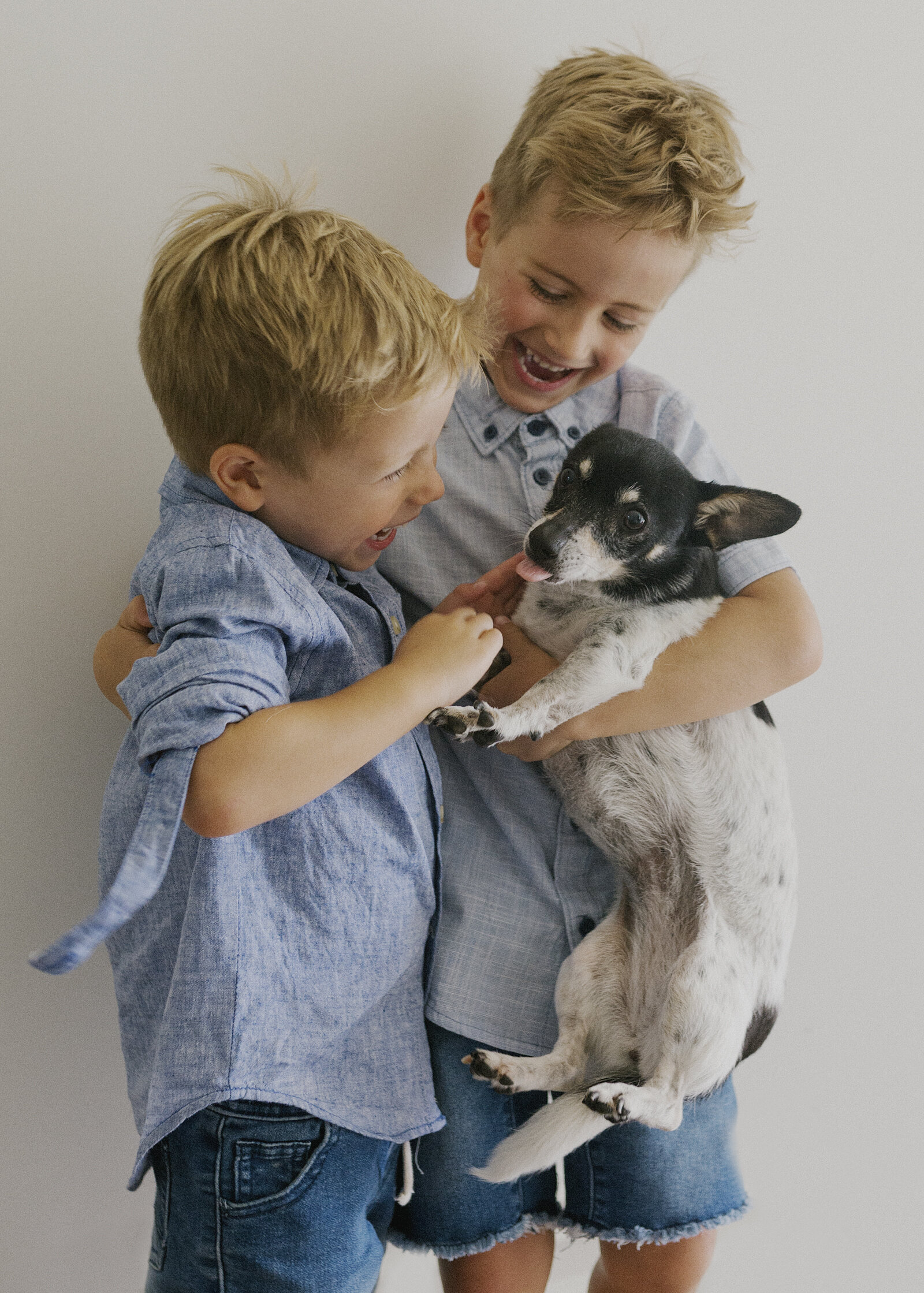

I suggest warming your kids up to photos by photographing them without too much attention. Try taking “behind the scenes” images of them playing with their pet, napping, reading, watching their favourite movie or playing their favourite game. These are the best images because you’re truly capturing them fully focused, involved in something they love. Spend some time documenting their days before asking for a smile.
Step 2:
The next step is to decide on your camera. Is it going to be that DSLR that you bought years ago and haven’t used since or are you going to grab your i-Phone? Both are great but the DSLR will take a little more practice than the iPhone that we all carry around in our back pocket.
If using a DSLR:
The first thing you’ll want to do is charge up the battery and find a memory card. Next you’ll want to turn your setting to Aperture Priority (YouTube has a bunch of great tutorials for every camera ever made). On a Canon it’s going to be the AV on the dial or in the menu. On a Nikon, it will be the “A”. By using Aperture Priority you’re telling the camera how much background blur or focus you want. Try setting the Aperture to the lowest your camera lens will allow (f2.8/4.0). The camera will auto adjust the shutter speed depending on how much light you have. Next you’ll want to set your ISO. Generally speaking ISO100-400 will produce the best image quality. If you’re shooting in a dark room without much light, you may need to bump that up to 800 or higher. Just know that the higher the ISO, the more “grainy” your images will be (think old school B&W film grain).

If using a Camera Phone:
First you’ll want to open you camera app on your phone. Next, you’ll want to select “photo” from the options (or portrait mode if you want that blurred background look). Then simply aim your phone at your subject, tap on their face and bring the slider (sunshine icon) up or down to brighten or darken the image. Easy peasey!!
You’ll also want to download the FREE Lightroom Mobile app for your phone to edit your images, which we’ll get to later .


Step 3
Find the Light
The next step is to find the best light in your house. You can do this by simply walking through your home and looking for large sources of light. Sliding glass doors and large bay windows work great! You can even ask your kids to play in the garage with the biggest bay door open for excellent light!

North facing windows will have the strongest light during the day and if the sun is out will be very bright and can overexpose your photos. If there is a strong pocket of light (really bright) move your child just out of it into the shadow area and take the shot. Don’t worry if it’s an overcast day as this gives even light and acts like a natural diffuser.
Set up a play area (puzzle, game, etc.) in front of the window source and ask your child to come join you. Get them started on the activity and then step away and grab your camera. This is where it gets fun! Try having your child sit in front of the window. You can either photograph them from the front or photograph them with the light behind them (we call this backlighting). Another idea is to go outside and photograph your child through a window. Try not to get your reflection in the shot by moving around until you can’t see it. If using a DSLR be sure your Aperture is set to the lowest number your camera will allow (f2.8/4.0) then adjust the green focus box to their eyes. If using your i-Phone, simply tap the eye closest to you on your screen. The image should provide a dark and moody look with a blurred background, with a magical glow on their face and body.


Step 4:
Now that you’ve got the hang of photographing your kids while they’re engaged in an activity, it’s time to get them involved.
Prompt #1
Ask your child to look at their sibling and whatever they do. DO NOT LAUGH. keep saying “Noooo,don’t do it, do NOT laugh. Seriously guys, what are you laughing at?” This works every time and works without siblings too.

Prompt #2
Give your child their favourite cuddly toy or blankie and position them either on their tummy or sitting in good window light either on the bed or on the floor next to a window. Ask them to give loves to the toy or blankie.


Prompt #3
Take some chalk into the garage. Open all the doors and grab a stepladder. Have your kids draw a rainbow, balloons or their favourite animal on the garage floor. While standing on the ladder with your back to the open garage doors, photograph from above looking down on them drawing.
Prompt #4
Have a dance off in the living room. Turn on their favourite song and throw out dance moves they need to copy. Ask them to do the Rob, the Macarena, Floss and freestyle. These are always hilarious shots.
Prompt #5
Have them play dress-ups and take some shots of mismatched shoes.

Prompt #6
Have a sing-a-long to their favourite tunes. Try changing the lyrics to something silly when singing with them (this always gets a laugh)!
EASY EDITING TIPS
Step 5:
By now you should have some great images and you’re ready to edit. The first step is to download the FREE Lightroom Mobile app for your phone. If you are editing images you captured on your phone, simply connect the app to your camera roll. If you’re editing images you took on your DSLR, you’ll want to import them to your computer and then Airdrop or email them to your phone.
Once you open the Lightroom app, select the image you want to edit from your camera roll on your phone. From here, click on the “Light” icon. Using the exposure slider, move it from left to right until your image looks bright enough.
Next you can adjust the contrast to make your images edgier. Moving the Highlights slider will make your brights even brighter. You can bring the shadows up or down, make your whites “whiter” and your blacks “blacker”.
Next up click on the “Colour” icon. A good starting point would be to click on the drop down menu titled “custom” and switch it to “Auto”. From here you can adjust the temperature to make your image warmer (yellower) or cooler (bluer) and adjust the tint to make it greener or more magenta (pink).
Next up click on the “Details” icon to sharpen your image, reduce the noise (grain), and add smoothness to your images.
Pro Tip: once you’ve edited your image to your liking, click on the “Presets” icon and then on the 3 dots in the top right hand corner, then “create preset”. Name your preset and then you can use it on future images shot in the same location/lighting/etc. to save yourself time.
Lastly you’ll want to click on the “Export” button on the top of the screen (between the question mark and the cloud icons) and save your image to your camera roll.

TO RECAP ….
The most important thing to remember is to have fun with this. Documenting your children’s childhood is incredibly important. If the situation is forced (say cheeeeeeese) it’s likely it will be the only thing you’ll all remember when looking back at that image in the future.
For the love of our kids, PLEASE get your images off your phone and print them. This generation is the most photographed generation to ever live. It would be a shame if they never got to see these images because they were stuck on an old iPhone that no longer works.
PLEASE also include yourself in the photos. Don’t wait until you’ve hit your ‘goal weight’ , hair perfect or outfit on point, our kids won’t care about this.

I hope this helps you with your photography journey. I so look forward to when I can come back and photograph your family once restrictions are lifted. Have fun!!
